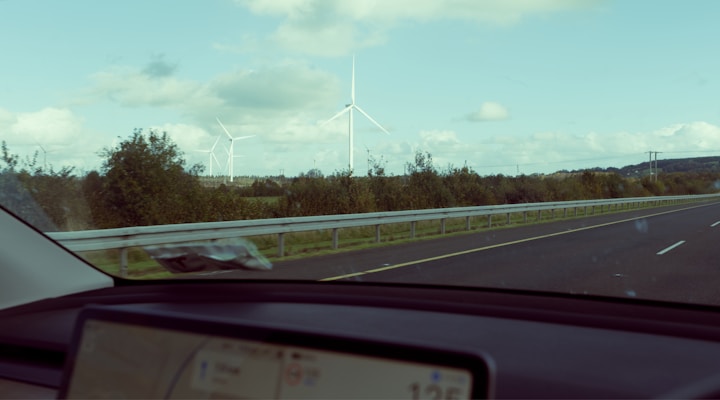
An in-depth analysis of the technology, the incidents, and the ongoing debate surrounding automated driving systems
Tesla’s Autopilot and Full Self-Driving (FSD) systems are built upon a sophisticated sensor suite and powerful computing. The hardware, known as Hardware 3 or the Full Self-Driving Computer, processes data from a primary vision-based array. This includes eight surround cameras providing 360-degree visibility, twelve ultrasonic sensors for close-range object detection, and a forward-facing radar on earlier models, though Tesla has moved towards a vision-only approach. The software stack performs three core functions: perception to interpret the environment, planning to navigate a path, and control to execute driving commands. Standard Autopilot combines Traffic-Aware Cruise Control and Autosteer for highway assistance. The FSD package adds capabilities like automatic city street driving, navigating intersections, and responding to traffic lights. Tesla’s strategy relies on collecting real-world data from its vast customer fleet to continuously train its neural networks, iteratively improving the system toward its ultimate goal of full autonomy.
The 2016 Williston, Florida crash marked a tragic first: the initial fatal incident involving Tesla’s Autopilot. On May 7th, a Model S driving with Autopilot engaged failed to detect a white tractor-trailer crossing its path. The car drove under the trailer, killing the driver. The National Transportation Safety Board (NTSB) found the system’s design, which allowed prolonged use without driver engagement, was a contributing factor, alongside driver inattention.
This was followed by the March 23rd, 2018, Mountain View, California crash. A Model X, again using Autopilot, struck a highway barrier, resulting in another fatality. The NTSB determined the vehicle’s Autosteer system directed the car into the barrier and that the driver’s over-reliance on the system, coupled with his being distracted by a mobile game, were central causes.
A recurring and alarming pattern emerged with multiple incidents involving Teslas on Autopilot crashing into stationary emergency vehicles. These crashes, investigated by the National Highway Traffic Safety Administration (NHTSA), highlighted a critical limitation: the system’s struggle to identify stopped vehicles on high-speed roads, leading to a series of similar collisions and raising serious questions about the technology’s operational design domain.
Tesla’s Level 2 automation fundamentally requires a driver-in-the-loop, a human actively supervising the system and ready to intervene instantly. This places the legal and operational responsibility squarely on the driver, not the vehicle. To enforce this, Tesla’s driver monitoring has evolved. Initially, it relied on a steering wheel torque sensor, a rudimentary system that could be defeated with minimal resistance. This contributed to incidents of automation complacency, where drivers, lulled into a false sense of security, became disengaged. Recognizing this critical flaw, Tesla later introduced an in-cabin camera to monitor driver attentiveness. However, the naming of the systems themselves—Autopilot and especially Full Self-Driving—arguably fosters a dangerous public misperception of the technology’s capabilities, potentially encouraging the very over-reliance and misuse the monitoring systems are designed to prevent. This gap between marketing and engineering reality remains a central controversy.
The regulatory landscape has shifted significantly in response to high-profile Autopilot-involved crashes, placing Tesla and its CEO under intense scrutiny. The National Highway Traffic Safety Administration has launched multiple defect investigations, examining if the system’s driver monitoring and operational design domain—where and how it is meant to function—are insufficient, potentially leading to foreseeable misuse. These probes scrutinize whether the technology can adequately ensure driver engagement, a core safety question. In this context, a recall is not a physical return to a dealership but a mandated, over-the-air software update to remediate a safety defect, a modern regulatory tool for connected vehicles. Consequently, new federal safety standards and reporting mandates for automated driving systems are being developed, forcing manufacturers to provide vastly more data on system performance and crashes, aiming to increase transparency and accountability across the entire industry.
Looking ahead, Tesla’s automation trajectory hinges on the maturation of its vision-only ‘Tesla Vision’ system. This shift away from radar aims to create a unified, scalable perception system, with software advancements focused on improving neural net interpretation of complex driving scenarios to prevent the types of crashes analyzed previously. However, the core industry-wide impediment remains the monumental challenge of validating the safety of such AI-driven systems in countless edge cases. For Tesla to build essential public and regulatory trust, greater transparency is non-negotiable. This must include clearly communicating the system’s operational limitations and sharing robust, verifiable safety data. The potential for this technology to drastically reduce accidents caused by human error is immense, promising a future with significantly enhanced road safety. Yet, this promise is counterbalanced by the inherent risks of deploying and refining such complex systems in real-world environments, where the development phase itself presents profound safety dilemmas.
Conclusions
Tesla’s automated systems represent a significant technological leap, yet they operate in a complex and imperfect real world. The journey toward full autonomy is paved with both innovation and sobering lessons from incidents that highlight the critical need for rigorous safety standards and continuous system improvement.